Guide
Digital Landlines in the UK: The Ultimate Guide to the 2027 PSTN Switch Off
Digital Voice, Power Cuts, Telecare and Scam Protection. Clear Answers Without Jargon.
Best landline replacementView plansThe UK landline network is being permanently switched off. By January 2027, every traditional analogue landline must move to a digital home phone or other landline replacement.
By January 2027, the Public Switched Telephone Network, known as the PSTN, will be retired. Every traditional analogue landline in the country must move to a digital alternative.
This is not optional.
It is not a small update.
It is the biggest change to home phone services in decades.
If you have a home landline, you need to understand what is happening, what changes inside your property, how power cuts affect your digital home phone, what happens to telecare devices, and how scam protection fits into this new digital system.
This is the definitive UK guide to the digital landline switchover, landline replacement and the PSTN switch off. You can also compare the best digital landline providers in the UK.
This nationwide digital voice migration is one of the largest infrastructure shifts in UK telecoms history, and every household planning to replace copper landline services needs a clear transition plan. For how digital voice works in practice and what a residential VoIP service involves, see our service guides.
If you are looking for clear answers without jargon, you are in the right place.
What you need to know
The definitive guide to the 2027 PSTN switch off, digital voice, and landline replacement.
What Is the UK Digital Landline Switchover?
The UK digital landline switchover is the nationwide retirement of the Public Switched Telephone Network (PSTN). Every traditional copper landline must be replaced with a digital home phone or other landline replacement that runs over broadband by January 2027.
In practical terms, this is an analogue landline replacement programme across the UK. If you currently rely on a traditional home line, you will move to a digital telephone UK service before the deadline.
When Do I Need to Replace My Landline in the UK?
You should plan to replace your landline before January 2027, but your exact migration date depends on your provider and region. Some homes will be moved earlier in staged rollout waves.
The best approach is to plan early, confirm your provider timeline, and choose a digital home phone setup that fits your household before last-minute changes reduce your options.

Is the UK Digital Landline Switchover Mandatory?
Yes. The PSTN shutdown is a national infrastructure change, so keeping a traditional copper line in its current form is not an option after the switchover period.
What is optional is the provider and setup you choose. You can select the digital voice telephone service that best matches your needs for reliability, support and scam protection. See our digital landline service and compare providers.
“Digital home phone = calls over broadband.”
What Is a Digital Home Phone and How Is It Different From a Landline?
A digital home phone is a landline replacement that uses your internet connection instead of copper telephone wires. A traditional landline uses the PSTN: physical copper lines connected to a local exchange. A digital home phone uses Voice over Internet Protocol (VoIP); your voice is converted into data and transmitted over broadband.
In practice, most homes will: plug their existing handset into the broadband router; use a small adapter that connects the handset to the router; or use a digital IP or WiFi handset. Your number usually stays the same. For a deeper explanation: digital home phone explained.
Why Is the PSTN Switch Off Happening in the UK?
“New digital networks: more reliable, more efficient.”
The PSTN is legacy infrastructure. It was not designed for modern internet driven communication. Maintaining copper networks across the UK is increasingly difficult and expensive. At the same time, the country is investing heavily in fibre broadband. Moving voice onto digital platforms allows providers to: retire ageing copper lines; simplify operations; reduce long term maintenance costs; integrate voice with data networks; support future innovation. The retirement of the PSTN is industry wide and affects every major provider.
For a full timeline: Digital switchover timeline 2024–27.
When Is the PSTN Switch Off in 2027?
The key date is January 2027. Before that: providers are migrating customers in stages; some regions switch earlier; new analogue services are no longer being widely installed.
You do not need to panic switch today. In most cases your provider will contact you in advance. However, waiting until the final months may reduce your options and increase confusion.
Do I Need Broadband for a Digital Home Phone?
Yes. A digital home phone (landline replacement) operates over an internet connection.
You need: a broadband connection; a router that remains powered on; and a compatible handset or adapter. If you do not have broadband, some providers supply a connection solely for the phone service. For equipment and setup, see prepare your home for digital landline.
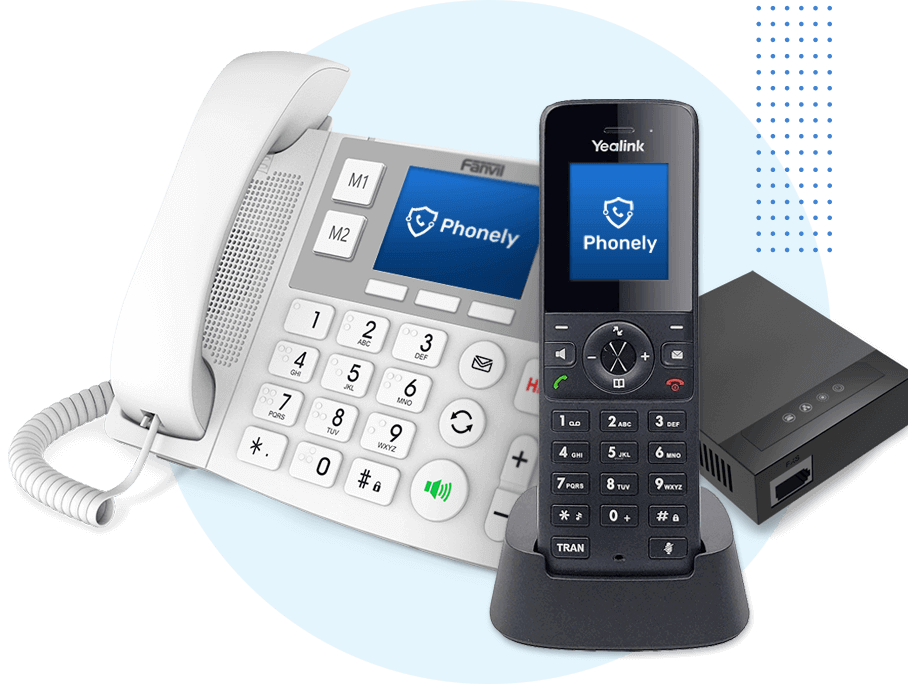
Phonely offers pre-configured Home VoIP phones, that connect to your router. If you want to keep your existing handset, Phonely offers adapters to make them compatible.

Will My Landline Work in a Power Cut After the Digital Switchover?
Traditional copper lines often worked during a power cut because they carried low voltage power from the exchange. A digital home phone depends on your router and broadband equipment. If electricity fails, your home phone may stop working unless you have: a battery backup unit; a mobile phone alternative; or a resilience solution from your provider.
If someone in your home relies on the landline for medical or safety reasons, ask your provider about vulnerability support. More details: digital voice and vulnerable users and anti-fraud and trusted contacts.
Digital Home Phone, Digital Voice and VoIP: Are They the Same?
In the UK, "digital home phone", "digital voice" and "VoIP landline" are often used interchangeably. All refer to a landline replacement that runs over broadband instead of copper.
However, digital home phone services differ in: equipment setup; call blocking features; support for vulnerable users; power resilience options; scam protection integration. If you are comparing digital home phone providers, focus on functionality, not just price. For terminology and comparison: digital landline vs VoIP and provider comparison.

What Is the Best Landline Replacement After 2027?
When people search for the best landline replacement in the UK, they are usually asking one simple question: what should I replace my traditional landline with once the PSTN switch off happens?
After January 2027, copper landlines will no longer operate in their current form. Every household will need a digital alternative.
The main landline replacement options in the UK are:
- A digital home phone service over broadband
- A VoIP landline using an adapter
- A digital handset connected directly to WiFi
- A mobile-only solution
- A hybrid digital voice service with additional protection features
Each option works differently. The right choice depends on how you use your home phone and whether reliability and scam protection are priorities.

Landline Replacement Options in the UK
Below is a simple comparison of the most common landline replacement types available after the PSTN shutdown.
| Replacement type | Keeps existing number | Works during power cut | Scam protection features | Long-term viability |
|---|---|---|---|---|
| Digital home phone over broadband | Yes | Only with backup | Often available | High |
| VoIP with adapter | Yes | Only with backup | Depends on provider | High |
| WiFi or IP handset | Yes | Only with backup | Depends on provider | High |
| Mobile-only replacement | No (in most cases) | Yes | Limited | Medium |
1. Digital Home Phone Over Broadband
This is now the most common landline replacement in the UK. Your existing phone number is transferred to a digital voice service that runs over broadband. You can usually keep your current handset by using a router port or a small adapter.
This option offers:
- Number retention
- Familiar home phone experience
- Potential scam blocking tools
- Compatibility with modern networks
For most households, this is the most practical and future-proof landline replacement.
For a service-focused buyer guide, see best landline replacement UK.
2. VoIP with an Adapter
A VoIP adapter connects your existing analogue handset to your broadband router. Functionally, this is similar to a digital home phone service, but features depend entirely on the provider you choose.
It can be a low-cost landline replacement, but not all providers include advanced scam protection or vulnerable user features.
3. WiFi or IP Handset
Instead of using a traditional phone socket, these handsets connect directly to your internet network. They are typically used in small businesses, but some households prefer them for flexibility.
Power dependency remains the same. If your router loses power, the phone may stop working.
4. Mobile-Only Replacement
Some households consider cancelling their landline entirely and relying only on mobile phones.
This removes the need for broadband-based voice services, but it also means:
- Losing your existing landline number in many cases
- No fixed home phone location
- Less control over scam blocking compared to specialist digital home phone services
For older residents or households that prefer a physical handset, this may not feel like a true replacement.
Which Digital Home Phone Is the Safest Long-Term Replacement?
After the 2027 PSTN shutdown, the safest long-term landline replacement for most UK homes is a digital home phone service that includes:
- Clear power cut guidance
- Compatibility with telecare devices
- Built-in scam protection tools
- The ability to keep your existing number
Digital landlines are not all identical. Some simply replicate analogue calling over the internet. Others add real-time call blocking and protection features.
Given the increase in nuisance and scam calls reported across the UK, choosing a digital home phone with protection built in is increasingly important.
You can compare digital home phone options.
Landline Replacement and the 2027 Deadline
Landline replacement is not optional. The PSTN switch off means traditional copper landlines will stop working in their current form.
However, you do not need to rush into the first option offered. The best approach is:
- Confirm your migration date with your provider
- Review your current setup and connected devices
- Compare digital home phone replacement options
- Plan for power cut resilience
By treating landline replacement as a planned upgrade rather than a forced change, you retain control.
Final Thought on Landline Replacement
The UK digital landline switchover is a national infrastructure shift. Choosing the right landline replacement is a personal decision.
For most households, a digital home phone that keeps your number, works with your existing handset, and includes modern protection tools is the most balanced solution.
If you want the wider context, return to the full UK digital landline switchover guide above.
Can I Replace My Landline Without Broadband?
Usually, no. Most digital home phone and digital voice services depend on a broadband connection because calls are carried over IP networks rather than copper lines.
Some providers can supply a voice-ready connection specifically for phone service, but the core technology is still broadband based. If you need extra resilience, combine your digital home phone with a backup power plan and a mobile fallback.

How Does Landline Replacement Work in Practice?
A digital voice call follows three stages: your handset captures your voice; the router or adapter converts it into digital data; the data travels over your broadband to the other person.
Common home configurations
Router with phone port — Plug your existing handset directly in.
ATA adapter — Keeps your existing phone; converts analogue to digital and connects to your router.
Digital handset — IP or WiFi handset connects to your network.
Mobile integration — Some services allow calls via a smartphone app.
For preparation: prepare your home for digital landline.
Are Telecare and Alarm Systems Affected by the Digital Landline Switch?
Yes. Many care alarms, pendant systems and medical alert devices were built for analogue networks. Before switching: contact your telecare provider; confirm compatibility; arrange upgrades if required. Do not assume compatibility.

Will Digital Home Phones Increase Scam Risk?
National changes create opportunities for fraud: some callers may pretend to represent network providers or government bodies. Never provide personal or banking details in response to an unexpected call about the digital switchover.
At the same time, a digital home phone can reduce scam risk. Traditional analogue lines allow only manual blocking. Digital platforms can integrate live data and automated block lists. A good landline replacement should offer scam protection, not increase exposure.

How to Prepare for the UK Digital Landline Replacement Step by Step
Use this four-step checklist to make your analogue landline replacement smoother and avoid last-minute disruption.
- 1
Confirm Migration Details
Wait for official communication. Verify equipment and dates.
- 2
Audit Connected Devices
List anything using your landline: care alarms; security systems; fax machines; payment terminals; entry systems.
- 3
Decide Your Preferred Setup
Choose between: keeping your existing handset; upgrading to a digital handset; or adding mobile integration.
- 4
Plan for Resilience
If your household relies on the landline for emergencies: discuss battery backup options; keep a charged mobile phone available; ensure trusted contacts are accessible.

Digital Home Phone vs Traditional Landline Comparison
When searching for landline replacement in the UK, many people want to know how a digital home phone compares to the traditional copper landline they are used to.
| Feature | Traditional PSTN | Digital home phone |
|---|---|---|
| Network type | Copper | Internet based |
| Works in power cut | Often yes | Only with backup |
| Automatic scam blocking | No | Yes |
| Call recording | No | Yes |
| App integration | No | Yes |
| Future proof | No | Yes |
For terminology and comparison: digital landline vs VoIP. For costs: digital home phone costs and FAQs.
Final Checklist Before the 2027 PSTN Shutdown
Before the PSTN switch off: confirm your migration date with your provider; audit telecare, alarms and any device using your landline; choose your landline replacement (digital home phone, adapter or mobile); plan for power cuts (backup or mobile); and review costs — many providers do not charge extra for the migration, but check digital home phone costs and FAQs.
Businesses: audit alarm monitoring lines, card payment machines, lift emergency lines, entry systems and fax lines. Schedule VoIP migration outside peak hours and test all emergency systems.
The UK is retiring copper networks. Digital voice will replace them everywhere. What matters now is ensuring your setup is correct, your telecare devices are compatible, your household understands scam risks, and you have a backup plan for power cuts. A home phone is about reassurance; a digital home phone can deliver that if implemented correctly.
Choose Phonely for a simpler, safer digital landline
The UK is moving away from traditional landlines, but switching does not have to be stressful. Phonely provides a familiar home phone experience with reliable calls, scam protection, easy setup, and award-winning support from a friendly UK-based team.
View Phonely plansFrequently Asked Questions
Everything you need to know about the UK digital landline switchover.
In most cases you can keep your existing handset by using an adapter or router phone port.
Yes. Number porting is widely supported when moving to digital landlines.
Digital landlines rely on powered broadband equipment. Without power, the service may stop unless a battery backup or alternative is available.
Yes. Digital landlines operate over an internet connection.
Related Guides
- What is a digital landline?
- Digital landline vs VoIP
- Digital switchover timeline 2024–27
- Preparing your home for digital voice
- Digital voice and vulnerable users
- Best digital landline UK comparison
- Internet phone for home UK
- Anti-fraud and trusted contacts
- Call blocking and scam protection
- Digital home phone costs and FAQs
Official guidance: Ofcom, Gov.uk, Digital Phone Switchover.
Ready to Replace Your Landline Before 2027?
Choose a Phonely plan and stay confidently connected with built-in scam protection.
How would you
like to pay?

Switch to annual payments and get a FREE VoIP Adapter, worth £49.99! Learn more
CallGuard and CallGuard+ monthly plans also include the free adapter.
Phonely Digital Landline
£9.97 /month
Increasing to: £11.97 on April 1st, 2027.
- UK telephone number or keep your own
- 1,600 minutes to UK landlines & mobiles
- International calls**
- Unlimited call duration
- Voicemail service
- Caller ID
- Withhold your number
- 141 - Withhold your number
- 1471 - Last caller number
CallGuard:
- Auto call blocking
- Trusted Person(s) nomination & app
- Call screening
- Quiet hours
- Anti-fraud intro
- Live call joining
- Offline alerts
- Unlimited call blocking
- Call recording
- Real-time suspicious call alerts
- Call transcription
- Keyword Notifications
Phonely with CallGuard
Was £29.96 /month£14.98 /month
Increasing to: £16.98 on April 1st, 2027.
- UK telephone number or keep your own
- Unlimited calls *
- International calls**
- Unlimited call duration
- Voicemail service
- Caller ID
- Withhold your number
- 141 - Withhold your number
- 1471 - Last caller number
- FREE GA11 adapter worth £50
CallGuard:
- Auto call blocking
- Trusted Person(s) nomination & app
- Call screening
- Quiet hours
- Anti-fraud intro
- Live call joining
- Offline alerts
- Unlimited call blocking
- Call recording
- Real-time suspicious call alerts
- Call transcription
- Keyword Notifications
Phonely with CallGuard+
Was £37.00 /month£29.00 /month
Increasing to: £31.00 on April 1st, 2027.
- UK telephone number or keep your own
- Unlimited calls *
- International calls**
- Unlimited call duration
- Voicemail service
- Caller ID
- Withhold your number
- 141 - Withhold your number
- 1471 - Last caller number
- FREE GA11 adapter worth £50
CallGuard:
- Auto call blocking
- Trusted Person(s) nomination & app
- Call screening
- Quiet hours
- Anti-fraud intro
- Live call joining
- Offline alerts
- Unlimited call blocking
- Call recording
- Real-time suspicious call alerts
- Call transcription
- Keyword Notifications
Still have questions? Visit our FAQ page or contact our friendly UK-based team on
0800 112 5000, email hello@phonely.co.uk or use our Chat to us.
* Unlimited calls are subject to our fair usage policy.
** International call rates are different depending on which country you're calling.
Check out our international call rates or use our calculator to see how much a typical call would cost.