UK Guide
What Is a Digital Landline?
A clear explanation of what digital voice means and what the 2027 UK switchover means for your home phone.
Read the full switchover guideExplore plansWhat Is a Digital Landline?
If you have heard that landlines are changing but you are not quite sure what that means, you are not alone.
The UK's old copper phone network is being switched off. By January 2027, traditional analogue landlines will be replaced with digital services. That means your home phone will no longer plug into the old wall socket. Instead, it will run through your internet connection.
If you want the full background on why this is happening and what the timeline looks like, you can read our complete guide to the UK digital landline switchover here: Digital Landlines in the UK: Complete Guide to the 2027 Digital Voice Switchover.
For now, let's break it down clearly.
What you need to know
A clear breakdown of digital landlines, equipment, and the 2027 switchover.
What does “digital landline” actually mean?
A digital landline is a home phone service that uses the internet instead of copper phone wires. The technology is called VoIP: your voice is converted into data, sent over your broadband, and turned back into sound at the other end.
Here's the difference:
| Traditional | Digital |
|---|---|
| Copper wires | Broadband |
| Wall socket | Router |
| Phone line power | Home electricity |
| Limited features | Call blocking, apps |
To you, it still feels like a normal phone call. You pick up the handset. You dial. It rings.
Why are landlines changing in the UK?
The current network is called the Public Switched Telephone Network, or PSTN. It has been in place for decades. However: the copper network is ageing, parts are harder to repair, maintenance costs are rising, and most of the UK has already moved to fibre broadband.
The PSTN is being retired by January 2027.
More than two thirds of UK landlines have already been moved to digital services. The remaining households will switch over before the deadline.
For the full timeline, our UK digital landline switchover guide covers it in detail.
Do I need broadband for a digital landline?
Yes. A digital landline uses your internet connection to make and receive calls. You will need an active broadband connection and a router with an available Ethernet port.
The good news: voice calls use very little bandwidth. Your calls will not slow down your streaming or browsing.
Can I have a digital landline without broadband?
In most cases, no. If you do not have broadband, your provider should discuss options; dedicated connections or extra support for vulnerable users may be available.
Does digital voice work with WiFi?
Yes. Your phone connects to the router via cable or a VoIP adapter. Fibre, standard broadband, 4G/5G routers, and some satellite connections (e.g. Starlink) all work as long as the connection is stable.
What equipment do I need for a digital landline?
One of the biggest worries people have is whether they need to replace everything.
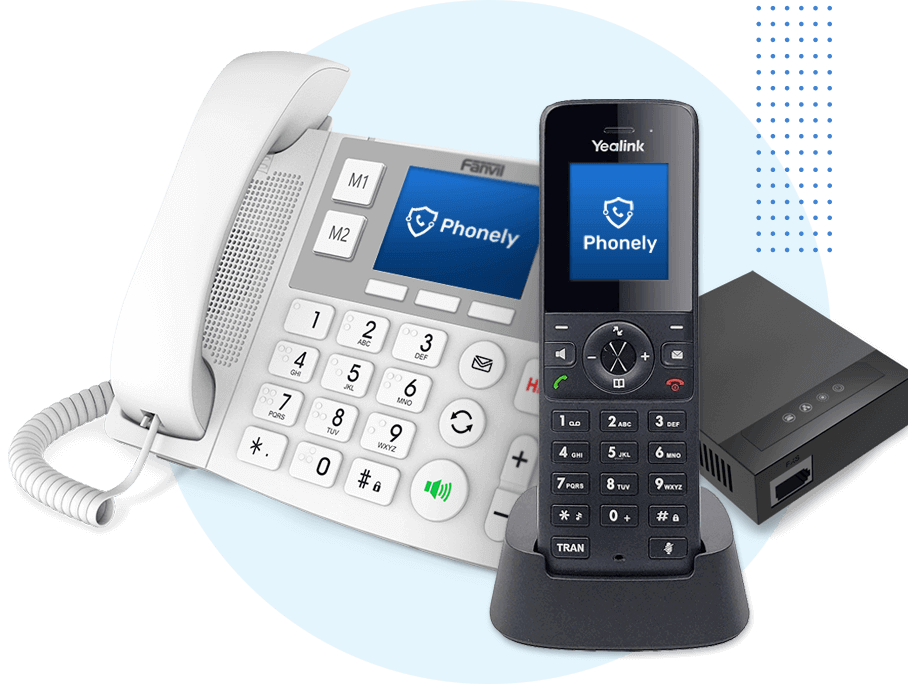
In most cases, you do not. You can usually keep your existing phone and plug it in via a small adapter.
Can I keep my existing phone?
Yes. Most standard home phones work perfectly. You will usually get a VoIP adapter so your handset connects to your router.
What plugs in where?
- Your phone → VoIP adapter
- Adapter → router
- Router → broadband
Some providers supply new handsets, but it's optional.
What happens during a power cut?
Traditional copper landlines were powered through the phone line, so they often kept working during a power cut. Digital landlines rely on your home electricity—if the power goes off, your router switches off too.
There are solutions:
- Battery backup units
- Using a mobile phone as a backup
- Mobile call apps that work over mobile data
If you rely on your landline for medical or emergency reasons, speak to your provider about backup options. You can still dial 999 when the line is powered and connected.
Can I keep my landline number?
Yes. In most cases, you can keep your existing number when switching to a digital landline. This process is called number porting. It is usually straightforward and often free, provided your number has not been disconnected for an extended period.
Is a digital landline better than a traditional one?
In many ways, yes. Digital landlines can offer clearer call quality, better reliability, more flexible features, advanced call blocking, mobile app access, and future-proof technology.
Because the service runs over broadband, providers can introduce smarter protection tools that were not possible on older copper networks.
For a full comparison and what to look for in a provider, see our complete UK digital landline switchover guide.
Is a digital landline safe for older or vulnerable users?
Yes, and in many cases it can be safer than traditional lines. Landline phone scams have increased over the past decade. Digital systems allow stronger protection:
- Automatic call blocking
- Real-time scam detection
- Suspicious call alerts
- Trusted person features
- Call recording for safety
These tools can help restore confidence for people who feel anxious about answering the phone. Read our guide to spotting phone scams and explore call blocking and scam protection.
The move to digital is not just about new technology. It is also an opportunity to make home phones safer.
Frequently asked questions about digital landlines
Not always. Costs depend on your provider, call bundle and setup. Many households pay similar monthly costs after switching.
In most cases, call quality is clearer. Because calls are digital, there is often less background noise.
No. Fibre is helpful but not essential. A stable broadband connection is what matters.
Yes, as long as the router has an Ethernet port and a stable signal.
Yes. You can still dial 999 or 112 as long as your router is powered and connected.
What should you do next?
If you are unsure about the 2027 deadline or what the switchover means for your household, the best next step is our full UK guide. It covers the timeline, what happens if you do nothing, how to prepare, and what to look for in a provider.
Or: